A Door Is More Than Its Leaf
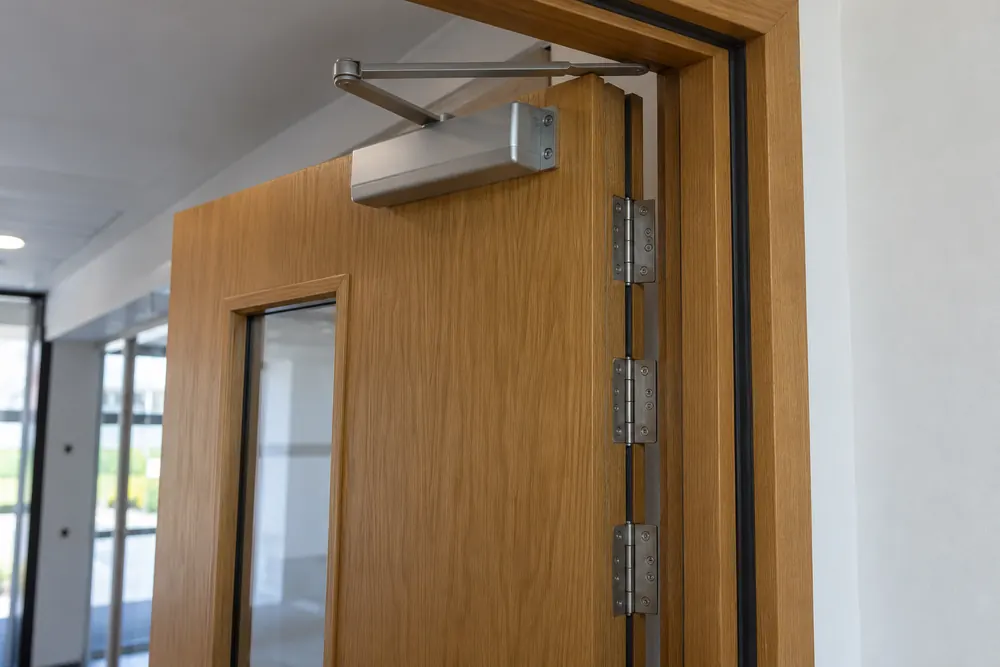
A fire door inspection looks at the assembly in its setting. The leaf, frame, hinges, closing device, seals, glazing and ironmongery need to work together if the door is to perform its intended role in restricting fire and smoke.
A door can appear substantial while failing to close against its latch, or have unsuitable alterations hidden by new decoration. Inspection helps distinguish visible condition problems from matters that need manufacturer information or further investigation.
We define the inspection scope before attending. A routine visual and functional inspection does not automatically include dismantling a frame, opening a wall, testing fire resistance or certifying the original installation.
When An Inspection Is Useful
Consider a door inspection where your fire risk assessment identifies damaged leaves, unreliable closing, missing seals or uncertainty about the condition of protected routes. It is also useful after alterations, contractor work or repeated repairs that may have changed an assembly.
For facilities managers handling many doors, a location-based register makes it easier to track defects without confusing similar entrances. The value comes from knowing exactly which door needs action and what evidence is needed to close the finding.
Scottish Law And Relevant Guidance
The Fire (Scotland) Act 2005, Part 3 and the Fire Safety (Scotland) Regulations 2006 provide the Scottish fire safety context. Fire precautions need appropriate maintenance, with the particular arrangements informed by the premises assessment and the risks present.
BSI: BS 8214 timber fire door assemblies gives recommendations for the specification, installation and maintenance of timber-based fire door assemblies within its scope. Product instructions and evidence for the specific assembly also matter, so an isolated gap measurement is not a complete judgement about performance.
Fixed inspection rules applying to certain buildings in England should not be presented as a universal Scottish commercial requirement. Set inspection and maintenance arrangements appropriate to the premises, use and condition.
What The Inspection Records
The inspection schedule should identify each door and its location, describe accessible components and record visible defects. Closing action, damage, alterations, seals and the condition of the frame are considered within the agreed level of inspection.
Photographs can help a maintenance team find the defect and distinguish it from a similar door nearby. If a door cannot be inspected because a room is locked or normal operation cannot be interrupted, the limitation should be listed rather than passed over.
Where there is no reliable evidence for the assembly, the report should state the uncertainty. It should not assign an unsupported fire-resistance rating just because the door looks like a familiar product.
From Defects To Repairs
Some findings can be addressed by competent maintenance, while others need advice from the manufacturer, installer or an appropriate specialist. Replacing components without checking compatibility can introduce a new problem even when the individual fitting is described as fire rated.
A repair schedule should make clear which defect is being addressed, what evidence supports the proposed repair and whether a further check is needed. Maintain traceable records when doors are replaced or significantly altered.
Fire door inspection also connects to the wider assessment. A well-maintained door is only useful if the route it protects and the surrounding fire separation remain appropriate, so serious wider concerns should be escalated for investigation.
What Affects The Inspection Cost
The number and type of doors, accessibility, quality of existing door records and reporting detail influence the quotation. Agree whether the price includes a new door register, photographs, accessible gap checks and a return inspection after repairs.
Before attendance, provide any existing schedule and product documents. Arrange access to both sides of the agreed doors and explain security, hygiene or operational restrictions that may prevent a full functional check during normal working hours.
Part Of Your Wider Fire Safety Plan
This service supports your wider fire risk assessment Glasgow requirements. If the work identifies a concern outside the agreed scope, the report should make the next step clear.
You can also explore fire safety audit or check our Glasgow and nearby coverage before sending an enquiry.
Common Questions
Does A Visual Inspection Prove A Fire Rating?
A visual fire door inspection does not by itself prove a fire-resistance rating. Reliable product information, installation records and compatibility evidence may be needed to understand the assembly. The inspector should record uncertainty and recommend appropriate follow-up, rather than assign a rating solely from the door’s appearance or thickness.
Can A Door Be Repaired Instead Of Replaced?
A fire door repair may be appropriate where a competent person can specify a suitable method supported by the assembly’s evidence and instructions. The decision depends on the defect and the whole assembly. Keep a repair record and arrange any necessary follow-up inspection so that the original finding can be closed properly.
How Often Should Commercial Fire Doors Be Checked?
Commercial fire door inspection frequency should reflect the building’s risks, door use, condition and relevant maintenance guidance. High-use or repeatedly damaged doors may need more frequent attention. The fire risk assessment and your maintenance arrangements should explain the approach, rather than applying an unrelated fixed interval to every door in Scotland.