Commercial Premises · Scottish Fire Safety
Fire risk assessment Glasgow
Know the risks. Understand your duties. Take the next step towards a safer workplace, with a practical fire risk assessment for your Glasgow business.
Good buildings.
Better prepared.
The Assessment
See The Risk.
Know What To Do.
A fire risk assessment connects the way your premises are used with the precautions that protect the people inside. It should leave you with practical decisions, not just a document to file.
Read about our approachFire Risk Assessment Glasgow helps business dutyholders commission assessments of commercial buildings, offices and industrial premises. The starting point is the operation itself: who is present, what could cause a fire and whether the available escape arrangements suit the people who rely on them.
A useful assessment examines ignition sources, combustible materials, warning arrangements, escape routes and the way fire safety is managed. It also considers people who may need assistance and those unfamiliar with the building, including visitors and contractors.
We help you define the inspection scope, gather the relevant records and understand the resulting action plan. Where a visible issue needs specialist investigation, the assessment should identify that next step instead of making a claim that a routine visit cannot support.
Assessment & Inspection
The Right Work For The Risk In Front Of You.
Start with the premises assessment, then address the detail where it matters. These services support business owners, property managers and facilities teams across Glasgow.
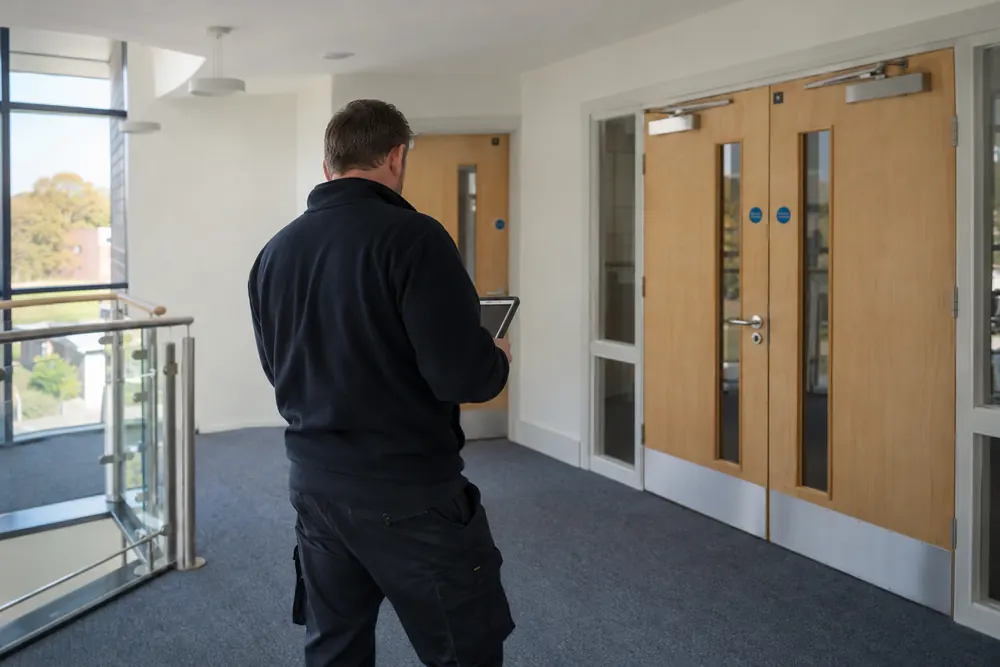
Commercial Premises
For business premises, shared buildings and commercial landlords.
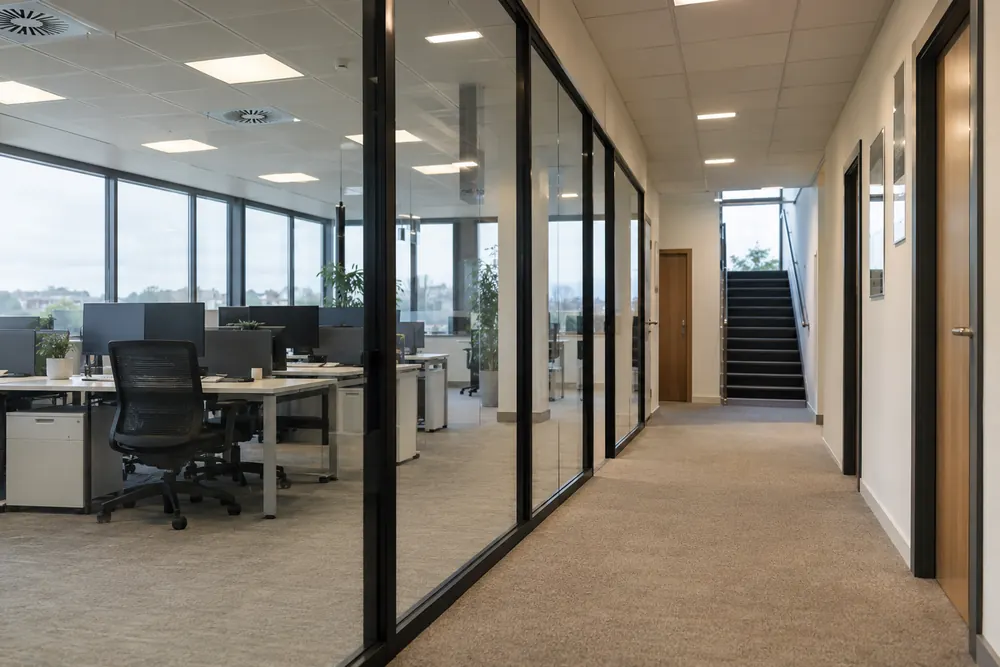
Offices
Escape routes, fit-outs and the realities of shared workspaces.
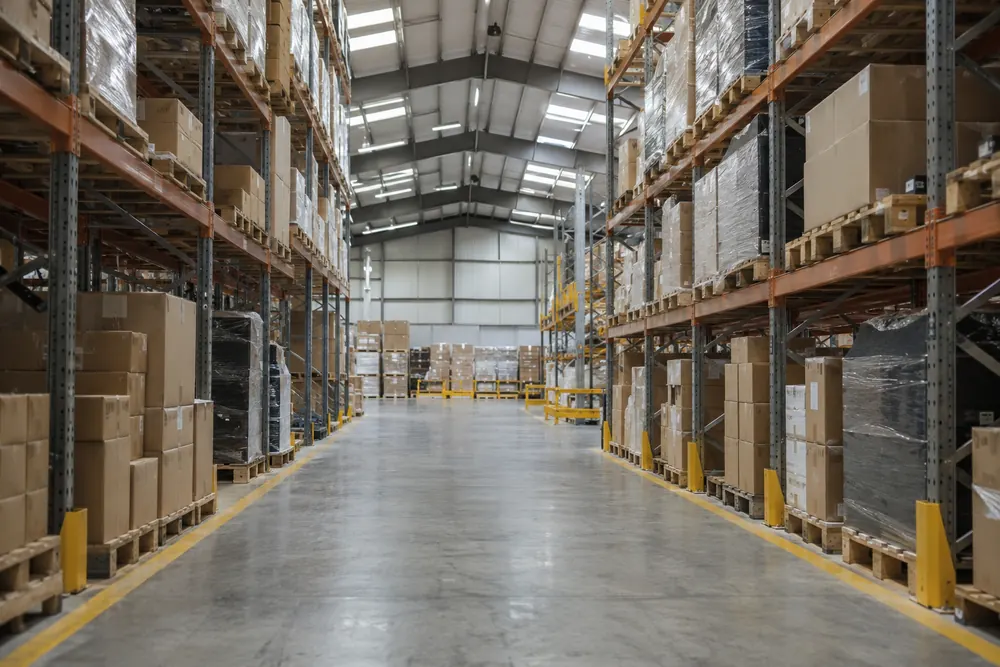
Warehouses
Storage, goods movement, charging areas and shift work.
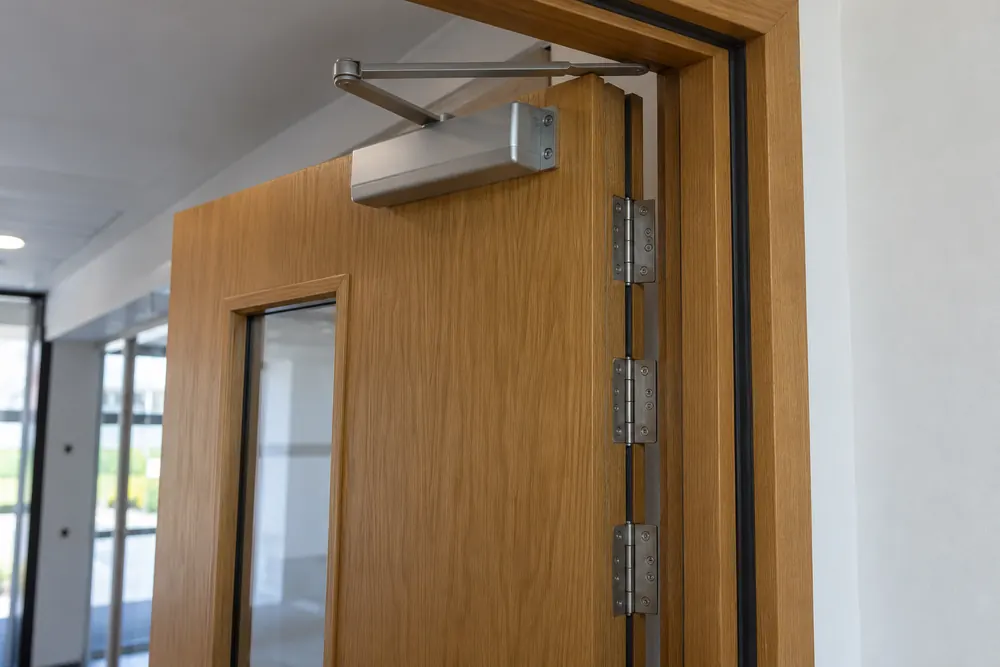
Fire Doors
Door condition, closing action, seals and traceable defects.
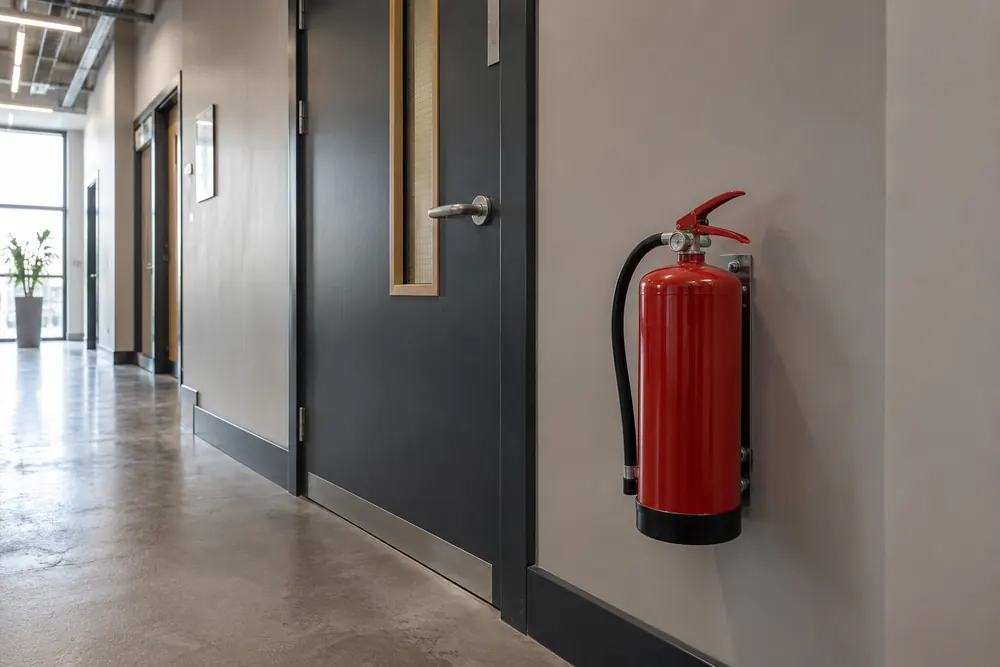
Fire Safety Audits
Connect your policies, maintenance records and actions.
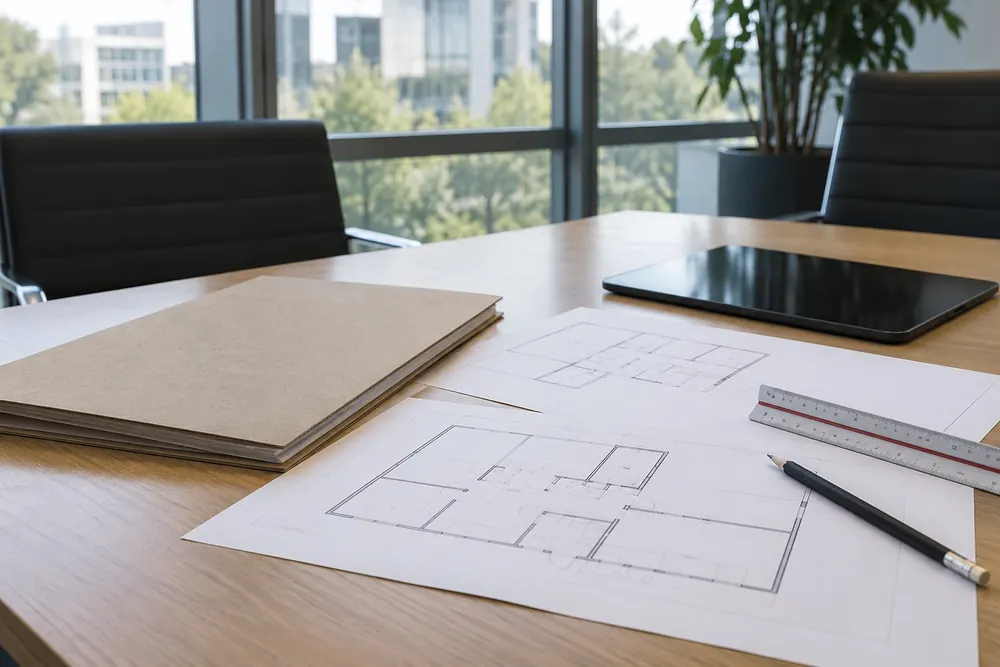
Assessment Reviews
For changed layouts, new activities and overdue actions.
Your Scottish Duties
Fire Safety Starts With Knowing Who Is Responsible.
In Glasgow, the core framework for relevant premises is Part 3 of the Fire (Scotland) Act 2005, Part 3 and the Fire Safety (Scotland) Regulations 2006. Scottish requirements should be used when deciding what a Glasgow business needs to do.
Employers have duties in respect of employees, and people with control of premises have duties within the extent of that control. A landlord, managing agent and tenant may all have a part to play in the same commercial building.
Appointing an external assessor does not transfer the business’s responsibilities. The business still needs to act on findings, maintain precautions and keep its arrangements relevant as the premises or operation changes.
A Glasgow report needs the Scottish framework. The Regulatory Reform (Fire Safety) Order 2005 is the England and Wales regime. It should not be presented as the law governing your Glasgow workplace.
Who The Assessment Is For
The service is for commercial dutyholders, including facilities managers, employers, contractors, commercial landlords and property managers. Typical premises include offices, workshops, warehouses, shops, education buildings and other workplaces.
The assessment needs to fit the use. A school with visitors unfamiliar with its layout, an office with controlled doors and a warehouse with changing stock do not present identical fire safety questions.
Agree The Boundaries Early
For shared premises, find out who controls the stairs, alarm, final exits and plant rooms before commissioning. Tell us whether the enquiry covers your occupied unit, common areas or the entire building.
Where responsibilities overlap, exchange relevant information with the other dutyholders. A report limited to one tenancy cannot establish the safety of an inaccessible shared route simply by referring to the landlord.
How It Works
From Site Information To An Actionable Report.
Agreeing the scope before the visit helps the assessment answer the questions that matter to the people managing your building.
Describe The Premises
Share the location, building use, approximate size and reason for the enquiry. Include any known changes or concerns.
Agree The Visit
Confirm the inspection boundaries, access arrangements and available documents, including previous findings and system records.
Assess The Risks
Consider the hazards, people and existing precautions together. Record inaccessible areas and matters needing specialist checks.
Put Findings To Work
Use the report to assign priorities, organise competent follow-up and record evidence when actions have been completed.
The Detail That Matters
An Assessment Is About How The Building Works.
A tidy reception and a recent alarm service are useful observations. They do not answer every question about the safety of the people using the premises.
Hazards, People And Escape
The assessment should consider electrical equipment, heat-producing processes, cooking, waste and combustible storage as relevant to the operation. Changes introduced by contractors or temporary work also need attention, particularly where normal routes or fire separation are affected.
People need an understandable route to safety and a warning they can receive. We consider occupied periods, visitors, lone working and assistance needs, alongside the way exit doors and security controls operate.
Evacuation arrangements should reflect the actual building and its users. If an existing strategy depends on staff assistance or specialist equipment, the assessment needs information about how those arrangements are maintained and put into practice.
Protection, Records And Limitations
Fire doors, warning systems and emergency lighting have different technical requirements. Relevant reference points include BSI: BS 8214 timber fire door assemblies, BSI: BS 5839-1 fire alarm systems and BSI: BS 5266-1 emergency lighting, where applicable to the work concerned.
A fire risk assessment does not automatically include servicing, system design or an intrusive investigation of hidden construction. The report should identify the extent of accessible observation and any specialist evidence needed.
Keep inspection, commissioning and maintenance records available. Where a document is missing or a defect remains open, make that visible in the action plan rather than treating the absence of evidence as proof that everything is satisfactory.
Scope & Cost
What Affects A Fire Risk Assessment Quote?
- The Building
Floor area, levels, layout, separate units and accessible areas all influence the time needed.
- The Operation
Storage, production, occupied hours and the needs of people present affect the assessment complexity.
- The Evidence
Existing reports, plans and maintenance information help define the work and identify unresolved questions.
- The Agreed Deliverables
Reporting detail, specialist checks and follow-up visits need to be clear before comparing quotations.
We do not use an unsupported headline price for every building. Describe your premises so that the proposed inspection and reporting scope can be considered before a quotation is agreed.
A report is the beginning of an action process. Give each finding an owner, record the priority and keep evidence of the work undertaken. A quotation or purchase order can show progress, but it does not demonstrate that a defect has been corrected.
Review the assessment regularly and when relevant conditions change. New partitions, altered storage, different work processes or a change in occupation can mean that previous conclusions need reconsideration before the next planned review date.
A review should say which assumptions still hold, which findings have changed and what remains unresolved. Where the original document is incomplete or the operation has changed substantially, a new assessment may be the sounder route.
Glasgow & Nearby Areas
From City Offices To Industrial Premises Along The Clyde.
Invest Glasgow: city centre districts identifies districts including Blythswood, Broomielaw and Merchant City. For a city-centre suite or shared office building, useful starting information includes the occupied floors, common escape arrangements and the landlord’s contact for building records.
Beyond the centre, Hillington’s commercial park and the manufacturing locations around Renfrew and Inchinnan bring different operational questions. In the east, Clyde Gateway: area covered covers Bridgeton, Dalmarnock and Rutherglen. Tell us about the premises itself so the assessment reflects its use, rather than relying on a postcode alone.
Explore our coverage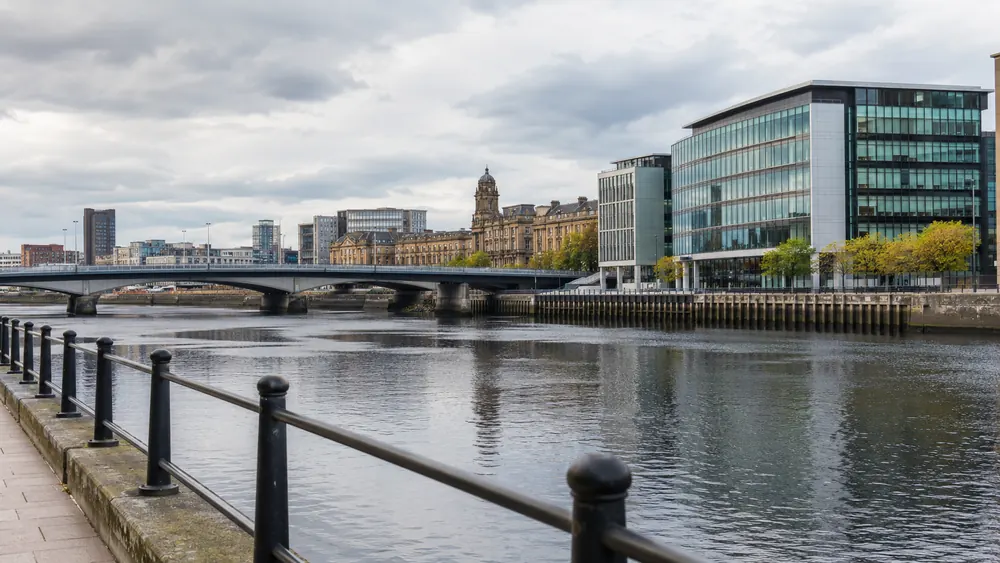
Common Questions
Before You Book.
Direct answers for the people responsible for fire safety in Glasgow’s commercial premises.
All fire safety questionsWho Needs A Fire Risk Assessment In Glasgow?
A fire risk assessment in Glasgow is needed by dutyholders for relevant premises under Scottish fire safety law. This commonly includes employers and people with control of business premises. Responsibilities follow the extent of control, so landlords, managing agents and occupiers may each need to act and coordinate with one another.
How Much Does A Glasgow Fire Risk Assessment Cost?
The cost of a Glasgow fire risk assessment depends on the building’s size, layout, use and complexity, along with access and the quality of existing records. A quotation should state the premises included, inspection limits and reporting scope. Tell us about separate units, unusual processes or planned alterations so that the proposed work matches your requirements.
Is Scottish Fire Safety Law Different?
Scottish fire safety law uses Part 3 of the Fire (Scotland) Act 2005 and the Fire Safety (Scotland) Regulations 2006 for relevant premises. The Regulatory Reform (Fire Safety) Order 2005 applies in England and Wales. A Glasgow assessment should use the correct Scottish duties and relevant guidance for the building’s use.
How Often Should We Review The Assessment?
A fire risk assessment review should happen regularly and when significant changes or concerns about validity arise. Changes to layout, processes, occupation or evacuation arrangements can justify an earlier review. There is no universal annual expiry date for every Scottish business, so record a review approach appropriate to your premises and keep changes under observation.
What Will We Receive After The Visit?
A fire risk assessment report should describe the premises and scope, identify significant findings and set out recommended actions with priorities. It should state inspection limitations and evidence still needed, rather than imply that inaccessible areas were checked. Agree the deliverables before commissioning, including how questions and any specialist follow-up will be handled.
Can You Cover Shared Commercial Buildings?
Shared commercial building assessments need clear boundaries between the parts controlled by the landlord, managing agent and individual occupiers. Common alarms, stairs and final exits can affect several businesses at once. Share available reports and explain who maintains each precaution so that responsibilities and information gaps can be addressed in the agreed scope.
Does An Assessment Include Alarm Servicing?
A fire risk assessment does not automatically include fire alarm servicing, emergency lighting testing or a detailed fire door survey. It can consider the available records and visible arrangements, then identify any need for specialist work. The quotation should distinguish assessment activities from maintenance, intrusive investigation and performance testing of individual systems.
Start With Your Premises
What Does Your Building Need?
Tell us where your premises are, how they are used and what prompted your enquiry. If you already have an assessment, mention any changes or outstanding actions.
With your agreement, your enquiry can be passed to a suitable local fire safety firm to discuss the scope and respond. You can then consider the proposed work before deciding whether to book.